
Seeing the Forest for the Debt: Reforming LIC-DSA for a Climate Era
By Ugasso Ibrahim Hassan
April 10, 2026
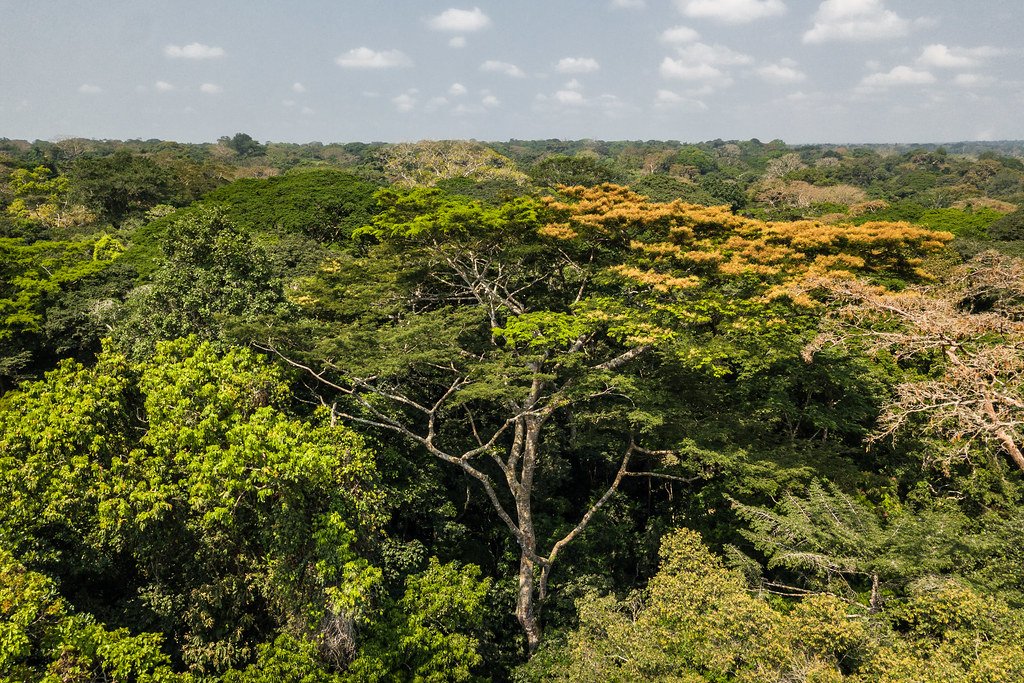
The Democratic Republic of Congo (DRC) has the second-largest rainforest in the world, absorbing tonnes of carbon on behalf of the planet, yet its debt carrying capacity is assessed by the International Monetary Fund (IMF) and World Bank (WB) using metrics that treat its natural capital as financially insignificant and economically invisible. The IMF and WB have long used Debt Sustainability Analysis (DSA) as a framework to support Low-Income Countries (LICs) in their borrowing decisions in a world that never had to price nature. That world no longer exists.
DSA and Its Shortcomings
Approved in April 2005, the DSA framework, jointly developed by the IMF and WB, was intended to support LICs in their debt-carrying capacity and overall financial stability. The analysis was revisited in 2017 to implement major improvements to its financial analysis in light of changes in the financial landscape. In this review, they recognized that LICs were more vulnerable to market volatility in international and domestic bond markets, and to financing from non-Paris creditors. The reform also introduced unique stress tests that incorporated climate change into the DSA. Despite these customized tests measuring idiosyncratic risks such as natural disasters or civil wars, countries must meet stringent eligibility criteria to qualify, and even when applied, the tests are not transparent in whether they are capturing discrete events or chronic compounding climate vulnerability that describes the fiscal reality of LICs. Without a newly enforced reform, the IMF and WB's Sustainable Development Goals, a target of DSA, remain out of reach for developing countries, not because they lack the assets, but because the framework cannot see them.
Incorporation of Climate Risks & Nature Pricing
For LICs, climate change is not a distant threat with a doomsday countdown; it is a present fiscal reality. Agriculture, energy, forestry, construction, and fisheries are the revenue streams for many emerging markets that determine a country’s ability to service its debt. Rising seas, prolonged droughts, and intensifying disasters are actively eroding the asset base of LICs, yet none of these dynamics are visible within the current DSA methodology. Given the recent severity of climate-related shocks, stress tests as a small part of DSA are not enough to support countries in dire need.
The integration of climate risks into DSA is not without controversy. Some experts argue that it could artificially inflate debt distress ratings, further restricting access to financing that LICs already struggle to obtain. Others have already recommended that the IMF and WB improve their climate risk and climate finance data, utilize climate risk scenarios, and adopt a risk management approach to their fiscal assessments. However, the cost for inaction is concrete: accounting for climate risks, researchers Marina Zucker-Marques, Kevin P. Gallagher, and Ulrich Volz found that 47 of 66 LICs would breach critical debt sustainability thresholds by 2028. While the IMF and WB acknowledge the importance of climate risk when calculating debt burden, incorporating climate change into DSA is complex and politically fraught. Despite this hurdle, the WB and IMF staff have long exercised judgment across many aspects of their DSA assessments–climate risk mitigation should be no different. As climate change continues to accelerate, we must rely on the resilience of our current ecosystem, and thus invest in that resilience. The progress made by the European Environmental Agency's (EEA) Environmental Economic Accounting offers a concrete foundation, one that classifies nature as capital and details ecosystem services with the granularity that a reformed DSA would require.
Natural capital is a stock of assets that generates flows of value, including freshwater, oceans, biodiversity, land, and climate. While the current DSA integrates the health and risks associated with ecosystem services, natural capital would value the ecosystem as an asset. Natural capital can be recognized through three distinct components. The first is ecosystem capital, divided into two categories: ecosystems as assets and ecosystems as service flows. Ecosystems as an asset include the extent, condition, and structure of biomes. As service flows, they include benefits of the environment, such as provisioning and cultural services. The second component is abiotic assets, the nonliving natural stock that holds intrinsic economic value such as solar radiation, minerals, and fossil fuels. The third are abiotic flows, the outputs of the natural environment that are renewable and self-replenishing, such as renewable energy and phosphate fertilizers.
Incorporating climate risk into the DSA alone would expose the substantial fiscal vulnerabilities many LICs already face, pushing more countries into “high risk” categories and adding to the liability side of the ledger. Nature pricing works on the other side of the equation entirely. Recognizing natural capital as a sovereign asset would provide a natural hedge against climate risk, offsetting vulnerability with the very ecosystems that buffer against it. Critically, it would also reorient capital allocation, incentivizing LICs and their creditors to invest in the protection and enhancement of natural capital as a forward-looking strategy for mitigating the physical risks of climate change, rather than simply absorbing costs after the fact.
Natural capital is not a new phenomenon. In November 2021, The Nature Conservancy (TNC) and the government of Belize announced a $364 million debt conversion for marine conservation, which reduced Belize’s debt by 12% of its GDP and confirmed its commitment to preserve 30% of its ocean reserves. Instruments like debt-for-nature swaps, however promising, remain discrete transactions. A reformed DSA would offer something entirely different: a holistic assessment of a country’s entire natural capital asset base, embedded into the framework that governs how LICs are financed. Nature pricing would send durable signals to capital markets, creditors, and multilateral institutions, systematically reallocating investment toward the protection and enhancement of the natural assets the world needs. The Congo Basin, an area of more than 4 million km2, is being steadily afflicted by rising temperatures and prolonged dry seasons. By first quantifying the impact of climate change on its ecosystem as a fiscal liability and then valuing its rainforest as sovereign capital, a reformed DSA would finally reflect the full financial reality of a country that has long been assessed by what it owes rather than by what it holds.
The Framework Must See
Natural capital allows previously invisible assets to be converted into creditworthiness. Countries stop being assessed purely on their liabilities and start being recognized as asset holders who benefit the Earth in more ways than one. Incorporating nature pricing is a logical extension of what the DSA was meant to do: accurately assess a country’s fiscal reality. The Democratic Republic of Congo’s rainforest has always been an asset. It’s time the framework treated it as such.