
By Lila DeLuca
March 6, 2026
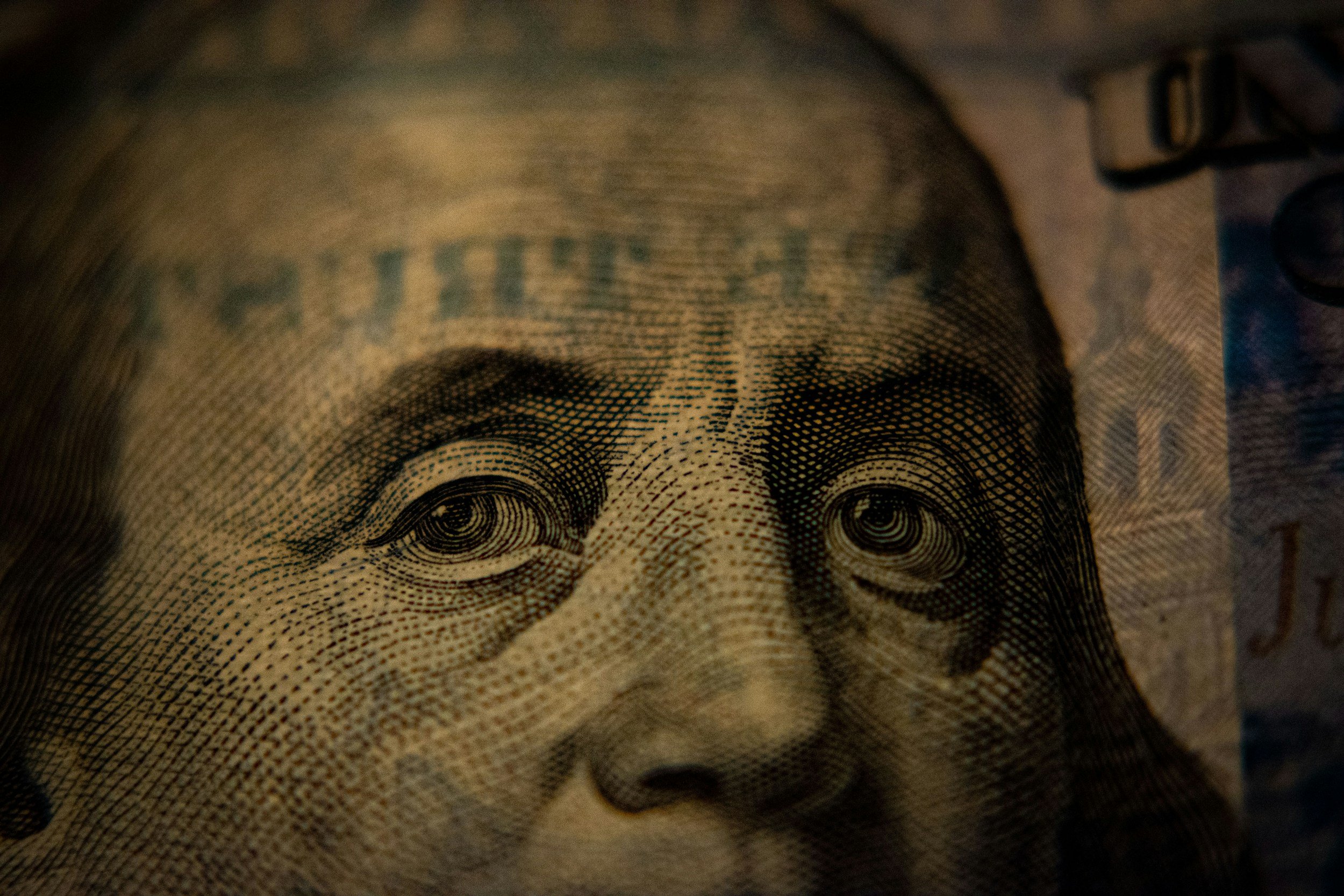
In 1971, Nixon abandoned the gold standard, a system established under the Bretton Woods system which directly valued a country’s currency to a fixed amount of gold. Since then, the U.S. dollar’s dominance has been anchored to the global dependency on fossil fuels to stimulate unfaltering demand for the currency—the petrodollar—and underpin American geopolitical unipolarity. However, Chinese solar panel infrastructure and the Chinese Renminbi are disrupting global energy markets and threatening global demand for fossil fuels and the dominance of the petrodollar system.
International Reserve Currency Status: Privilege and Power
Core to the scaffolding that grants the United States the financial and geopolitical privilege of serving as the world’s primary reserve currency is the political and economic bargain struck between the U.S. and its allies. States settle the vast majority of their international trade in U.S. dollars—particularly in critical commodities such as oil and gas—in exchange for the security guarantees provided by the world’s largest military power. Additionally, with the largest U.S. military bases housed in the oil-rich Gulf States, the U.S. has strategically secured unparalleled global influence in prime fossil fuel markets. By leveraging geopolitical power to artificially augment demand for the dollar, the U.S. is able to reap the financial benefits domestically of serving as the international reserve currency.
Considering its global prestige, the U.S. dollar serves as the central denomination of global finance and debt and the safest asset for central banks during crises. These privileges render persistent global demand for U.S. dollars, especially U.S. Treasury securities, as they are deemed the safest asset for a sovereign to hold. This licenses the U.S. to run large fiscal and trade deficits and allows the Federal Reserve to maintain low interest rates. Behind this systemic power structure lies a feedback loop where, as foreign central banks and sovereign funds purchase Treasury bonds, strong demand pushes bond prices up, stimulating decreased interest rates. By tying the dollar to fossil fuel markets, the United States preserves geopolitical leverage and sustains global demand for its currency and indirectly for its assets—an arrangement now threatened by the accelerating shift toward solar and renewable energy investment.
Solar Investments Threaten Dollar Status
Because oil-exporting nations anchor their balance sheets in U.S. credit-backed assets, large-scale renewable investment by American allies weakens the petrodollar system and the dollar’s privileged status. At the same time, global sustainability initiatives—driven by heightened ESG reporting, growing renewable energy markets, and long-term climate commitments—further erode the system’s durability.
A central player in the disruption of global energy markets is China and the Chinese Renminbi. Accounting for 80% of total global solar panel manufacturing and exports, Chinese solar panels are the driving force in dethroning the petrodollar, considering an estimated 80% total global renewable capacity in 2024 was produced by solar. Since 2011, China's investment of over 50 billion USD into new solar supply capacity has created hundreds of thousands of manufacturing jobs, positioning China as the global solar panel supplier. In 2025, the world's largest importers of Chinese solar panels included the Netherlands, importing 22.5 gigawatts (GW) of volume, Pakistan importing 16.9 GW, and, falling high in the rankings as well were UAE and Saudi Arabia, importing 8.5 and 8.8 GW respectively.
While the large majority of these trade deals are still invoiced and financed in U.S. dollars, an emerging trend of the internationalization of the Renminbi is particularly notable within developing economies, where nations are financing sizable solar projects under the Chinese currency. In the past three years, Pakistan has become the epicenter for the green-energy transition in the Global South. It was estimated that by the end of 2025, Pakistan’s cumulative solar imports were expected to roughly match the installed generation capacity of the national power system, representing a shift from dollar-backed fossil fuel energy imports towards Renminbi-backed green investments.
In the Gulf States, while investment in Chinese solar infrastructure is currently significantly smaller than Pakistan, lofty climate goals established by some of the world’s largest fossil fuel exporters in the past 10 years underscore the global initiative to invest in renewables as a mitigation tactic to climate change. Climate goals such as Saudi Arabia’s “Vision 2030”, which targets a renewable capacity of 130 GW by 2030, and “UAE Energy Strategy”, which aims for a net-zero target by 2050, underwritten by a renewable investment target of 140-200 billion AED by 2030, point towards a slow, but plausible global renewable energy transition.
The global energy transition—driven increasingly by Chinese green technology and supported by emerging economies in the Global South—disrupts trade structures historically anchored by U.S. dollar–denominated financial flows. If the Renminbi continues to penetrate global energy markets through Chinese solar infrastructure and grid investment abroad, the credibility and prestige of the U.S. dollar may erode.
A Detrimental Paradox: Petrodollar Safeguarding to Climate Inaction
As emerging green markets move away from petrodollar dependence and drive the global energy transition, the United States confronts a structural paradox. Advancing decarbonization weakens the dollar-based energy order underpinning U.S. financial hegemony, while expanded investment in renewables—especially Renminbi-linked solar infrastructure—could threaten the domestic balance sheet and trillions in dollar-denominated foreign holdings. Does this dynamic render climate inaction a byproduct of preserving dollar supremacy and geopolitical unipolarity?
From certain vantage points, American political resistance towards a global energy transition can be interpreted as a national security measure to defend the dominance of the U.S. dollar. However, it can also be deemed as ideological climate denialism. Regardless, as emerging renewable markets increasingly pressurize the foundational financial and geopolitical pillars of the petrodollar, the once stabilized nature of a world shaped by the unipolarity of the U.S. dollar may no longer suit a future propped upon the climate decisions of today. Therefore, neglecting the undeniable rise of renewable markets as a disruptor towards the legitimacy and prestige of the petrodollar is no longer an option. The rise of decarbonized climate technologies and an increasingly multipolar world order calls for a reshaping of the petrodollar feedback loop. While historically fossil fuels have globally anchored trust in credit-worthy U.S. assets, climate resilience today hinges on a radical reimagining of this system. Instead of dismissing proactive climate strategy as a concept incompatible with the U.S.-driven economic and geopolitical order of today, climate change must be ideologically reconstructed as a national security pillar threatening the globe holistically.
Much as Nixon’s abandonment of the gold standard reshaped the global monetary order in 1971, today, a shift away from the petrodollar could mark the beginning of a new global financial era. In this emerging system, global finance may no longer revolve around the prestige of the U.S. dollar but instead operate through a multipolar architecture of shared monetary influence.